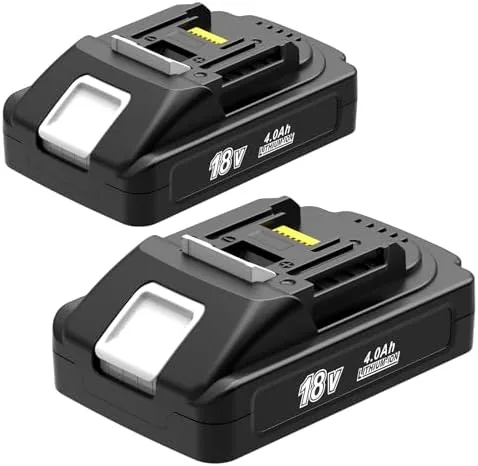
Worthmah — Replacement For Makita Battery
Powering Professionals and DIY Enthusiasts Who Demand More
Worthmah Replacement for Makita Battery exists for the professional contractor who refuses to let downtime interrupt a job, the woodworker who needs hours of uninterrupted runtime, and the DIY enthusiast who expects professional-grade performance without the premium price tag. The brand was built on a simple observation: replacement batteries should match or exceed OEM specifications while remaining accessible to every budget. This philosophy drives every aspect of product development, from cell selection to safety certification.
The target audience spans a wide spectrum of power tool users united by common needs. HVAC technicians rely on these batteries to power diagnostic tools and installation equipment throughout demanding service calls. Construction crews count on consistent voltage delivery across impact drivers, circular saws, and reciprocating saws. Home improvement enthusiasts appreciate the value proposition that allows them to stock multiple backup batteries without financial strain.
What sets this brand apart from generic replacements is the commitment to safety and performance testing. Every battery carries FCC, CE, RoHS, and UN38.3 MSDS certifications — the same standards required of original equipment manufacturers. This dedication to quality assurance means professionals can trust these batteries on job sites where reliability directly impacts livelihood and reputation.
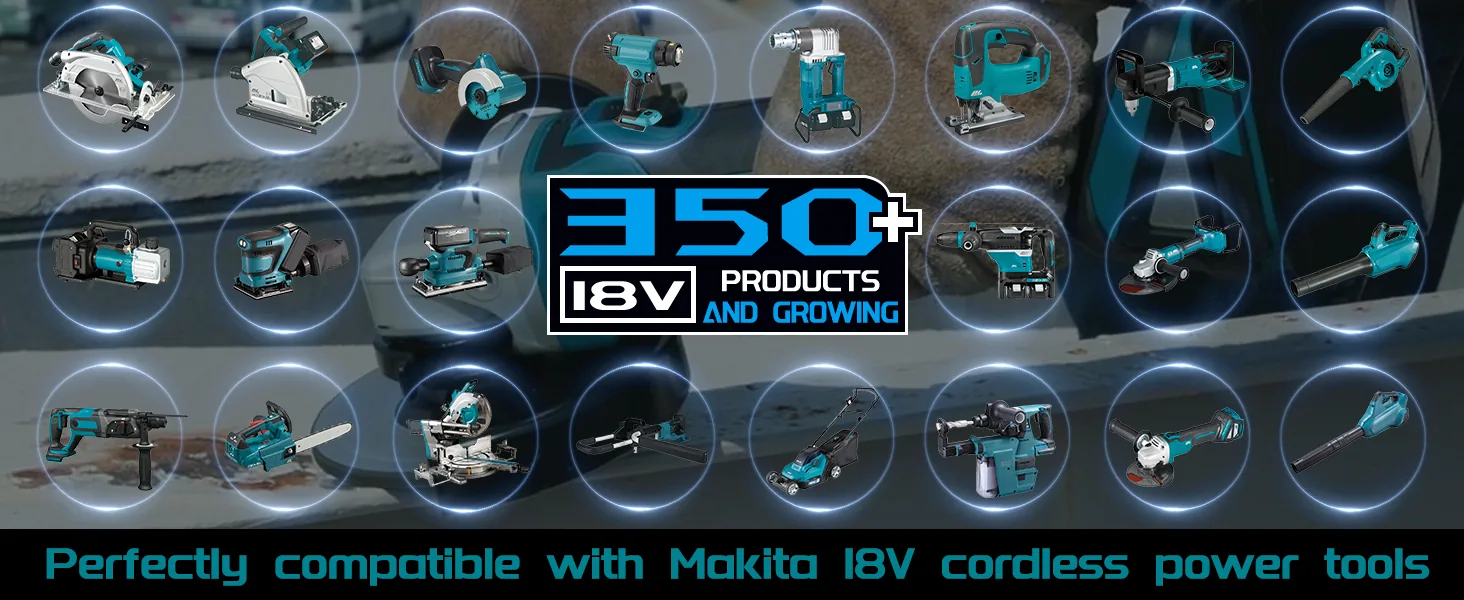
A Complete Power Solution for Every Makita 18V Tool
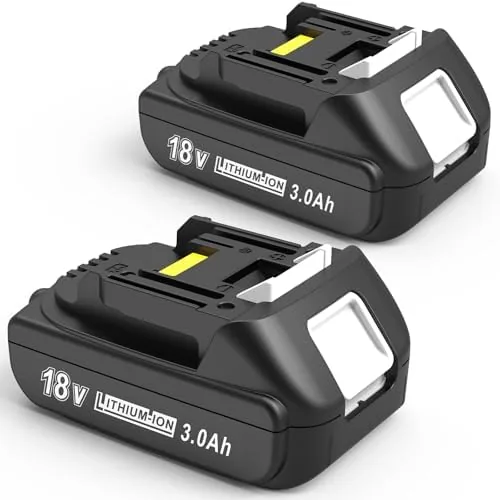
The product lineup addresses the full spectrum of runtime requirements and budget considerations. Entry-level options start with the 3.0Ah dual-pack configuration, delivering twice the runtime of standard 1500mAh batteries while maintaining a compact form factor suitable for overhead work and tight spaces. This capacity serves users who prioritize tool balance and maneuverability over extended runtime.
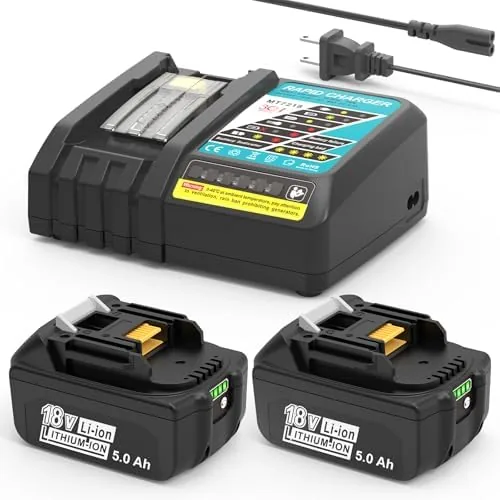
Mid-range selections include the 4.0Ah and 5.0Ah configurations, each engineered with Grade-A lithium cells arranged in 5S2P architecture for optimal power delivery. The 5.0Ah variant comes bundled with a compatible charger featuring 100V-240V input range, making it suitable for international job sites and varied power infrastructure. This all-in-one solution eliminates compatibility concerns for users building or expanding their tool collection.
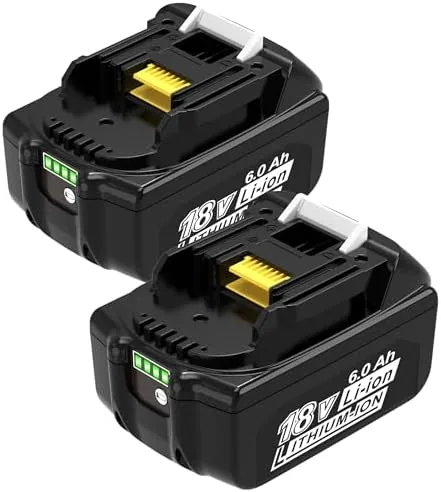
The flagship 6.0Ah dual-pack represents the maximum capacity offering, designed for extended woodworking sessions and construction projects where battery swaps disrupt workflow. Ten Grade-A cells deliver sustained high-power discharge up to 15C capability, ensuring consistent performance whether driving lag bolts or cutting dimensional lumber. LED charge indicators on each unit provide real-time status monitoring without interrupting work to check remaining capacity.
The Integrated BMS Architecture That Prevents Failures
The engineering philosophy centers on the proprietary Battery Management System featuring multi-point protection circuitry. Unlike basic replacement batteries that simply connect cells to terminals, this architecture monitors six critical parameters continuously: charge level, discharge rate, current flow, voltage stability, short circuit conditions, and thermal state. Each protection circuit operates independently, creating redundant safeguards that prevent cascading failures.
Overcharge protection activates when voltage exceeds safe thresholds during charging cycles, preventing thermal runaway conditions that damage cells and create safety hazards. The over-discharge circuit prevents deep depletion that permanently reduces capacity — a common problem with unprotected batteries left in tools during storage. Over-current monitoring ensures the battery delivers power within safe limits even when tools demand peak amperage during stall conditions.
Thermal management deserves particular attention in this design. High-drain applications generate significant heat within battery cells, and the BMS monitors temperature continuously to prevent thermal events. When sensors detect elevated temperatures, the system reduces output to allow cooling before damage occurs. This proactive approach extends cell lifespan and maintains capacity retention across hundreds of charge cycles. The high-strength plastic housing survives 1.5-meter drop tests, protecting internal components from the impacts common on construction sites.
Worthmah Replacement for Makita Battery Features That Define Professional Performance
- Grade-A Lithium Cell Construction Every battery pack uses premium lithium-ion cells rated for consistent discharge curves and extended cycle life, avoiding the capacity degradation common in budget replacements.
- Universal Charger Compatibility Direct compatibility with original Makita chargers eliminates the need for adapter purchases or proprietary charging equipment, simplifying workflow integration.
- Zero Memory Effect Technology Partial charge cycles do not reduce maximum capacity, allowing users to top off batteries between tasks without long-term performance penalties.
- High-Current Discharge Rating Up to 15C discharge capability supports demanding tools like circular saws and grinders that require sustained high amperage during operation.
- Real-Time LED Status Display Integrated charge level indicators eliminate guesswork, showing remaining capacity at a glance without removing the battery from the tool.
- Six-Point BMS Protection Comprehensive safeguards against overcharge, over-discharge, over-current, over-voltage, short circuit, and overheating conditions protect both battery and tool investment.
Top-Selling Configurations Chosen by Contractors and Craftsmen
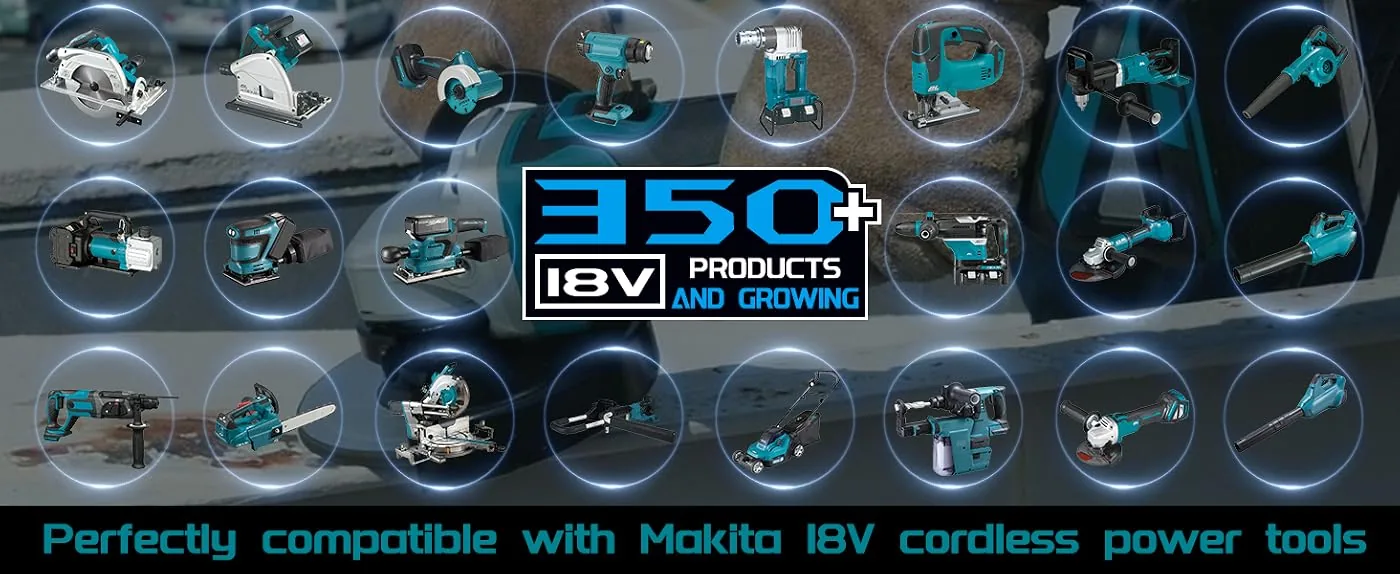
The 2-Pack 6000mAh 18V configuration consistently ranks as the most popular choice among professional users. This package delivers maximum runtime for demanding applications, with each battery housing ten Grade-A cells in 5S2P arrangement. Contractors favor this option for full-day job site use, where the extended capacity reduces battery swap frequency and maintains productivity through long shifts. The included LED indicators prove particularly valuable when managing multiple batteries across a crew.
Budget-conscious buyers gravitate toward the 2-Pack 3.0Ah variant, which offers compelling value for lighter-duty applications. The compact size suits overhead drilling and driving tasks where tool balance matters, and the 2X runtime improvement over standard 1500mAh batteries provides meaningful performance enhancement. This configuration serves as an excellent entry point for DIY users transitioning from corded tools.
The 5.0Ah Battery and Charger Combo attracts users building new tool systems or those needing reliable charging infrastructure. The MT7218 charger accepts 100V-240V input with 6.5Ah output current, delivering rapid charge times compatible with demanding professional schedules. This all-in-one solution eliminates compatibility questions and provides everything needed to begin using Makita 18V tools immediately upon delivery.
Grade-A Lithium Cells and Impact-Resistant Housing
Cell quality determines battery performance more than any other factor, and the manufacturing process begins with rigorous cell selection. Every lithium-ion cell undergoes capacity testing, internal resistance measurement, and voltage consistency verification before assembly. Cells that fall outside specification tolerances are rejected, ensuring only Grade-A components reach final products. This selection process costs more than accepting mixed-grade cells but delivers the consistent performance professionals require.
The 5S2P cell arrangement in higher-capacity models balances voltage requirements with capacity goals. Five cells in series deliver the 18V nominal output Makita tools expect, while parallel pairs double available capacity. This architecture also provides redundancy — should one cell develop higher resistance over time, the parallel configuration maintains usable output while the BMS monitors balance across all cells.
External construction focuses on job site durability. The high-strength plastic housing passes 1.5-meter drop testing onto concrete surfaces, surviving the falls that inevitably occur during professional use. Terminal contacts use copper alloys selected for conductivity and corrosion resistance, maintaining solid connections across years of insertions and removals. Ventilation slots positioned away from likely impact zones allow heat dissipation without compromising structural integrity.
All-Day Runtime and Consistent Power Delivery in Demanding Conditions
Field performance validates laboratory specifications, and user reports consistently highlight extended runtime as the primary benefit. The 6.0Ah configuration powers impact drivers through several hundred fastener installations on a single charge, while circular saws complete multiple sheet cuts without voltage sag that affects cut quality. Woodworkers report full-day shop sessions with the larger capacity options, cycling through router work, sanding, and finishing without reaching for the charger.
Voltage stability under load distinguishes premium replacements from budget alternatives. Inferior batteries exhibit significant voltage drop during high-current draw, causing tools to slow and reducing cutting power precisely when maximum performance matters. The BMS-regulated output maintains consistent delivery throughout the discharge cycle, with power curves that mirror original equipment batteries. This stability ensures the final cuts of a charge match the first in speed and quality.
Durability testing extends beyond drop resistance to cycle life evaluation. Batteries maintain rated capacity through hundreds of complete charge cycles when used within recommended parameters. The zero memory effect design allows top-off charging between tasks without the capacity degradation that plagued older battery technologies. Users who charge opportunistically — during lunch breaks or while switching between job site locations — experience no long-term penalty for this practical charging behavior.
Getting Maximum Life From Your Worthmah Replacement for Makita Battery
- Initial Charge Protocol Fully charge new batteries before first use to calibrate the BMS and establish accurate LED indicator readings for future charge cycles.
- Storage Temperature Range Store batteries between 50°F and 77°F when not in use, avoiding extreme heat that accelerates cell degradation and cold that temporarily reduces capacity.
- Partial Charge Acceptance Top off batteries at any charge level without concern for memory effects — the lithium chemistry and BMS design support opportunistic charging.
- Post-Use Cooling Period Allow batteries to cool for 15-20 minutes after heavy use before initiating charge cycles, reducing thermal stress on cells during the charging process.
- Long-Term Storage Preparation Store batteries at approximately 50% charge for extended periods, checking and recharging every three months to prevent over-discharge during dormancy.
- Contact Maintenance Wipe terminal contacts with a dry cloth periodically to remove dust and debris that can create resistance and heat at connection points.
Compatibility Verification and Safe Installation Practices
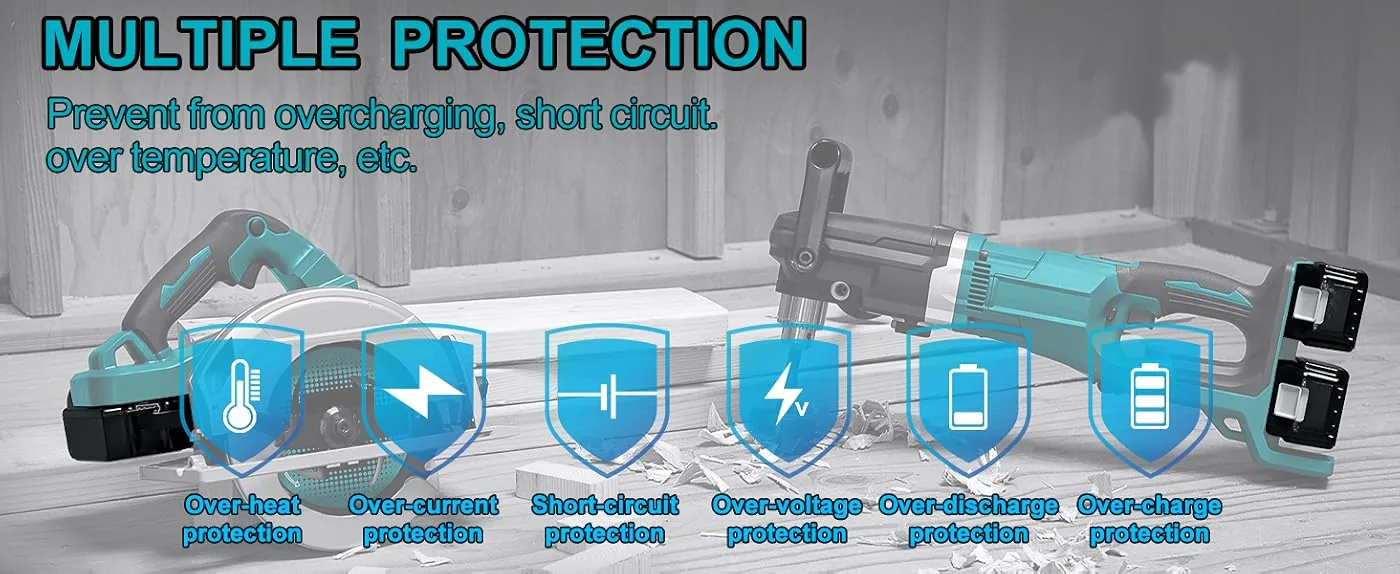
These batteries fit the Makita 18V LXT tool system, compatible with models including but not limited to those using BL1860B, BL1850B, BL1840B, BL1815, and similar battery designations. Verification requires checking the tool battery compartment for 18V LXT compatibility markings. Older 18V NiCad systems use different mounting configurations and are not compatible with this lithium-ion replacement line.
Installation follows the same process as original batteries. Slide the battery into the tool until the latch clicks securely into place, confirming full terminal engagement. The LED indicators illuminate briefly during insertion, confirming power connection. If the battery does not slide smoothly, check for debris in the tool compartment or battery rails before forcing insertion that could damage contacts.
Charging compatibility extends to all standard Makita 18V lithium-ion chargers, including rapid chargers and dual-port models. The included charger in combo packages provides an alternative for users without existing charging infrastructure. Charger LED indicators function normally, displaying charge status and completion as expected. Do not use modified chargers or those showing damage, as improper charging voltage can defeat BMS protection circuits.
The Smart Choice for Trade Professionals and Serious Home Improvers
Professional Applications
- Construction crews requiring backup batteries across multiple tools
- HVAC technicians powering diagnostic and installation equipment
- Woodworkers needing extended shop sessions without interruption
- Electricians cycling through drills, drivers, and cutters daily
Home Workshop Users
- DIY renovators tackling weekend projects efficiently
- Hobbyist woodworkers building furniture and crafts
- Homeowners maintaining properties with cordless convenience
- Garage mechanics using impact tools for automotive work
Selecting the Right Replacement for Makita Battery Capacity
Capacity selection depends on usage patterns, tool requirements, and workflow preferences. The 3.0Ah option suits users prioritizing lightweight handling for overhead work or those with light-duty tools that draw minimal current. Impact drivers and compact drills pair well with this capacity, offering excellent runtime-to-weight ratios for fastening applications. This entry-level capacity also provides an affordable way to stock multiple backup batteries.
Mid-range 4.0Ah and 5.0Ah options balance runtime with reasonable weight for most professional applications. These capacities power everything from drills and drivers to jigsaws and reciprocating saws through substantial work sessions. The 5.0Ah combo package makes particular sense for users lacking chargers or those wanting dedicated charging infrastructure separate from their Makita original equipment.
The 6.0Ah configuration addresses maximum runtime requirements for high-drain tools and extended work periods. Circular saws, angle grinders, and rotary hammers benefit most from this capacity, as these tools draw significant current that depletes smaller batteries quickly. Users who find themselves frequently swapping batteries during projects should consider this upgrade, as the productivity gains often justify the modest cost increase over smaller capacities.
Worthmah Replacement for Makita Battery vs. Leading Competitors
| Feature | Worthmah | Powerextra | Waitley |
|---|---|---|---|
| Maximum Capacity Available | 6.0Ah | 5.0Ah | 5.0Ah |
| Safety Certifications | FCC, CE, RoHS, UN38.3 MSDS | CE, FCC | CE, RoHS |
| BMS Protection Points | 6-point multi-layer | 4-point protection | 4-point protection |
| Drop Test Rating | 1.5 meters | Not specified | 1 meter |
| LED Charge Indicators | Standard on all models | Select models only | Standard on all models |
| Memory Effect | Zero memory effect | Zero memory effect | Zero memory effect |
| Charger Combo Available | Yes — with MT7218 charger | Battery only | Battery only |
| Discharge Rating | Up to 15C | Up to 10C | Up to 10C |
Specifications based on manufacturer published data at time of writing. Actual performance may vary by specific model.
Maintaining Peak Performance Through Proper Battery Care
- Regular Terminal Cleaning Wipe battery and tool terminals monthly with a dry cloth to remove dust, debris, and oxidation that create resistance at connection points.
- Avoid Complete Discharge Remove batteries from tools when LED indicators show low charge rather than running until the tool stops, preserving cell health and BMS calibration.
- Climate-Controlled Storage Store batteries indoors at moderate temperatures when not in use, avoiding vehicles, outdoor sheds, and other locations with temperature extremes.
- Charge Cycle Management For batteries used infrequently, perform a complete discharge and recharge cycle every 30-60 days to maintain cell balance and BMS accuracy.
- Visual Inspection Routine Check housing for cracks, terminal damage, or swelling before each use — discontinue use immediately if any damage is detected.
- Proper Disposal Protocol Recycle depleted batteries through authorized electronics recycling programs rather than disposing in standard waste streams.